
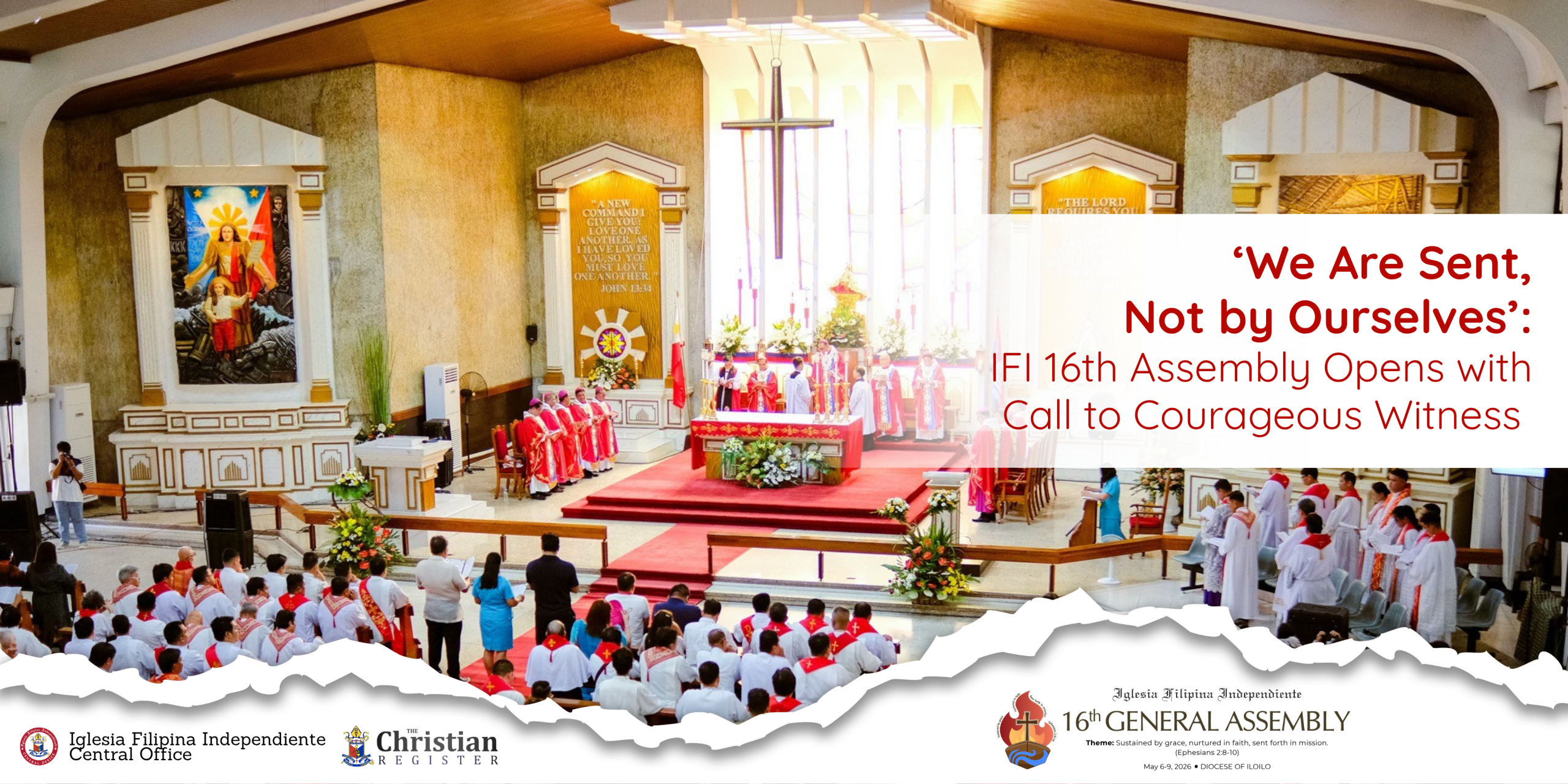
THE IGLESIA Filipina Independiente will hold its 16th General Assembly in Iloilo City from May 6 to 9, 2026, bringing together clergy and lay delegates from 53 dioceses in the Philippines and abroad. Guided by the theme, “Sustained by Grace, Nurtured in Faith, Sent Forth in Mission,” and grounded in Epistle to the Ephesians 2:8–10, the gathering will reflect on the Church’s life and witness in a time of both challenge and renewal. Speaking on the priorities of the gathering, The Most Rev. Joel O. Porlares, Obispo Maximo of the IFI, highlighted the importance of ongoing discernment on proposed amendments to the 1977 Constitution and Canons, the IFI’s highest law. “These proposals are not merely structural revisions,” he said, “but part of our shared responsibility to ensure that the Church remains responsive, accountable, and mission-oriented in a rapidly changing world.” He added that the Church remained committed to safeguarding the spirit of the Constitution and Canons, particularly the balance between clergy and laity and IFI’s identity as “episcopally led and synodically governed.” “Our task is not to abandon what has shaped us, but to strengthen it,” he said, noting that Church structures must continue to serve the Gospel and sustain its witness today.The assembly will serve both as a constitutional gathering and a space for collective discernment. Delegates will bring reports, experiences, and questions from across dioceses, as the Church listens for direction in the years ahead. Reflecting on evolving leadership within the Church, The Rev. Mary Grace Ejercito-Masegman, the first woman governor general of the National Priest Organization of the IFI, said: “I hope for a widening of spaces where women and young people are not only welcomed but trusted as co-workers in God’s mission.” She added that when women, gender-diverse persons, and the youth are given room to lead, the Church more fully reflects the life-giving movement of the Spirit. “There are various local and global challenges to which IFI is called in service and solidarity, from unrest to the climate crisis,” said Vaughn Alviar, national youth president. “We must also ensure that the Church becomes one well-adapted to modern times, in the way it runs and the way it does mission.” The IFI continues its journey marked by resilience and struggle. While leadership and lay participation have grown, clergy and lay workers serving marginalized communities continue to face risks, including harassment and red-tagging. These realities raise urgent questions about sustaining mission, caring for communities, supportinandg leaders in demanding contexts. At its core, the assembly affirms that the Church endures through God’s grace, grows in faith, and is sent into mission. As the IFI gathers in Iloilo, it does so trusting that God continues to guide its life and witness in the world.
𝗟𝘂𝘇𝗼𝗻 𝗖𝗵𝘂𝗿𝗰𝗵 𝗛𝗥𝗗𝘀: 𝗣𝗿𝗼𝘁𝗲𝗰𝘁 O𝘂𝗿 P𝗿𝗼𝗽𝗵𝗲𝘁𝗶𝗰 W𝗶𝘁𝗻𝗲𝘀𝘀
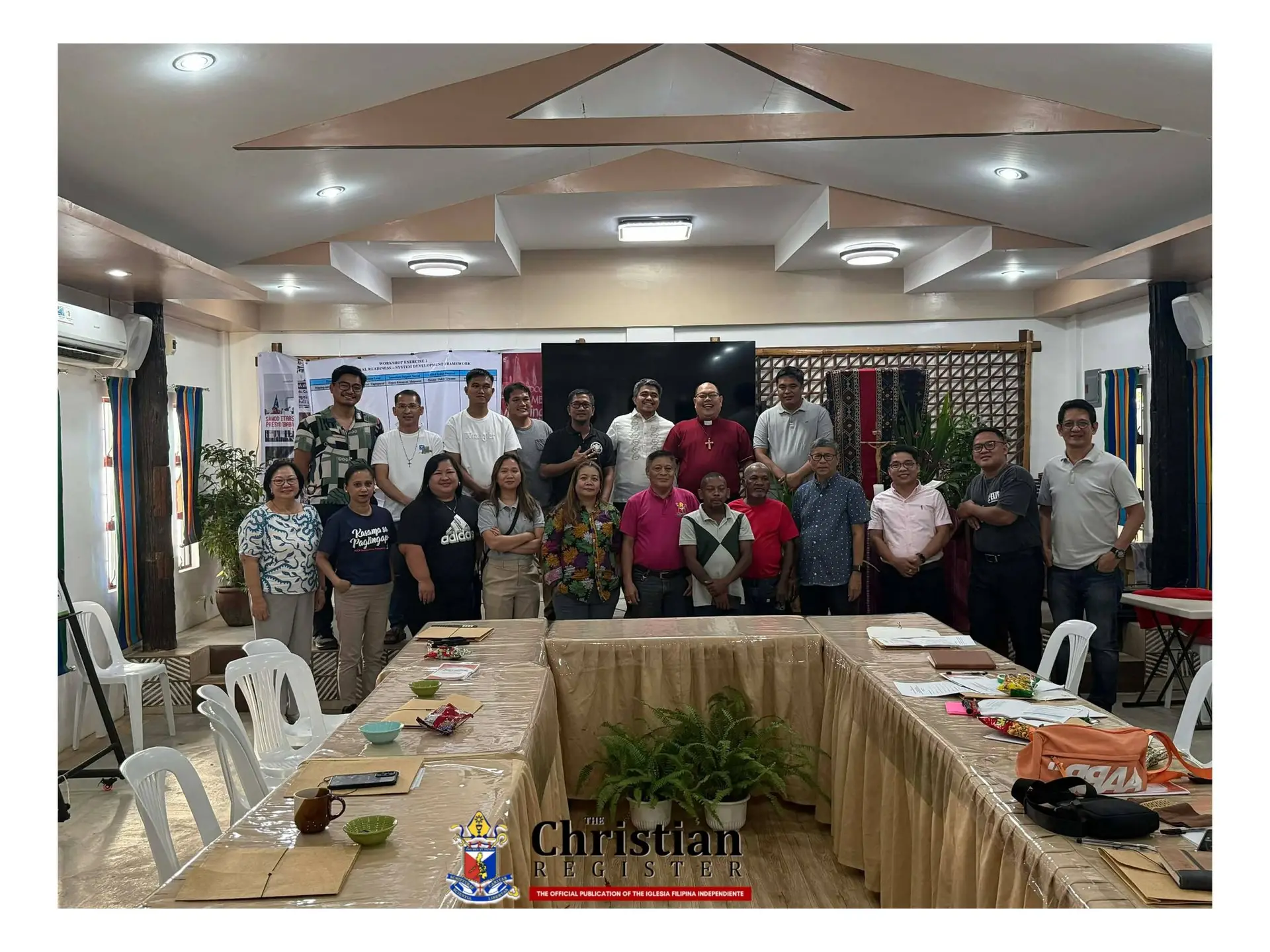
Some 20 church-based human rights defenders (HRDs) from the Luzon dioceses of the Iglesia Filipina Independiente (IFI) gathered at Aglipay Central Theological Seminary on March 9-11 for a consultation on a national support framework for them. The gathering was organized under the Program for the Accompaniment and Support of Church-based HRDs (PASCH), with the support of the Evangelical Lutheran Church in Northern Germany. “This national framework is much-needed,” said Rev. Wilfredo Ruazol, one of the consultants for PASCH. “A lot of issues weigh down HRDs in the Philippines, including church people. Recognizing human rights defense as a crucial part of our heritage as IFI and of Christ’s mission today, we need to ensure that the Church is able to help church-based HRDs persist in their prophetic witness.” The consultation in Luzon and upcoming ones in Visayas and Mindanao would ascertain current local and national challenges faced by church-based HRDs, and gather insights on how they could remain engaged with human rights work despite all these. In the workshops for the Luzon leg, the participants noted experiences of red-tagging and other forms of harassment, as well as maladjustment, or an inability of one’s mind to adapt properly to a context where their human rights work is threatened. They agreed that the Church needed to develop security and engagement protocols, establish a church-wide protection framework, and create psychosocial and pastoral care programs for HRDs. Concerns and gaps in the Church response were unpacked after an overview of the situation of human rights defense nationwide and an introduction to mental health and trauma, led by Jimarie Snap Mabanta, a program director of the National Council of Churches in the Philippines, and Estrella Catarata, a registered social worker and psychologist, respectively. Rev. Dr. Eleuterio Revollido, ACTS rector and PASCH national convener, also discussed theological and sociopastoral perspectives on human rights defense. Lawyer Marben Panlasigui, legal counsel of the Cordillera Human Rights Alliance, discussed legal protections and remedies for HRDs in distress. IFI, not new to human rights work, is also not new to the threats. One of its biggest campaigns today is for the freedom of an HRD, Deacon Aldeem Yañez, now facing cases of terrorism financing and illegal possession of firearms and explosives. The Church, in its consistent participation in the Universal Periodic Review on the Philippines at the United Nations, has noted several human rights violations directed at church-based HRDs. The list includes the extrajudicial killing of Obispo Maximo Alberto Ramento and Rev. William Tadena in Tarlac, Benjamin Bayles in Negros Occidental, Meliton Catampongan in Surigao del Norte and Erning Aykid in Oriental Mindoro. Various church leaders have faced cases of red-tagging, some of which graduated to surveillance, harassment and trumped-up charges. All those experiences and reports are expected to inform PASCH in its work to capacitate the Church to protect its HRDs.
𝗜𝗙𝗜 Y𝗼𝘂𝘁𝗵 F𝗹𝘆 𝘁𝗼 𝗦𝘄𝗲𝗱𝗲𝗻 𝘄𝗶𝘁𝗵 E𝗰𝘂𝗺𝗲𝗻𝗶𝗰𝗮𝗹 H𝗲𝗮𝗿𝘁𝘀
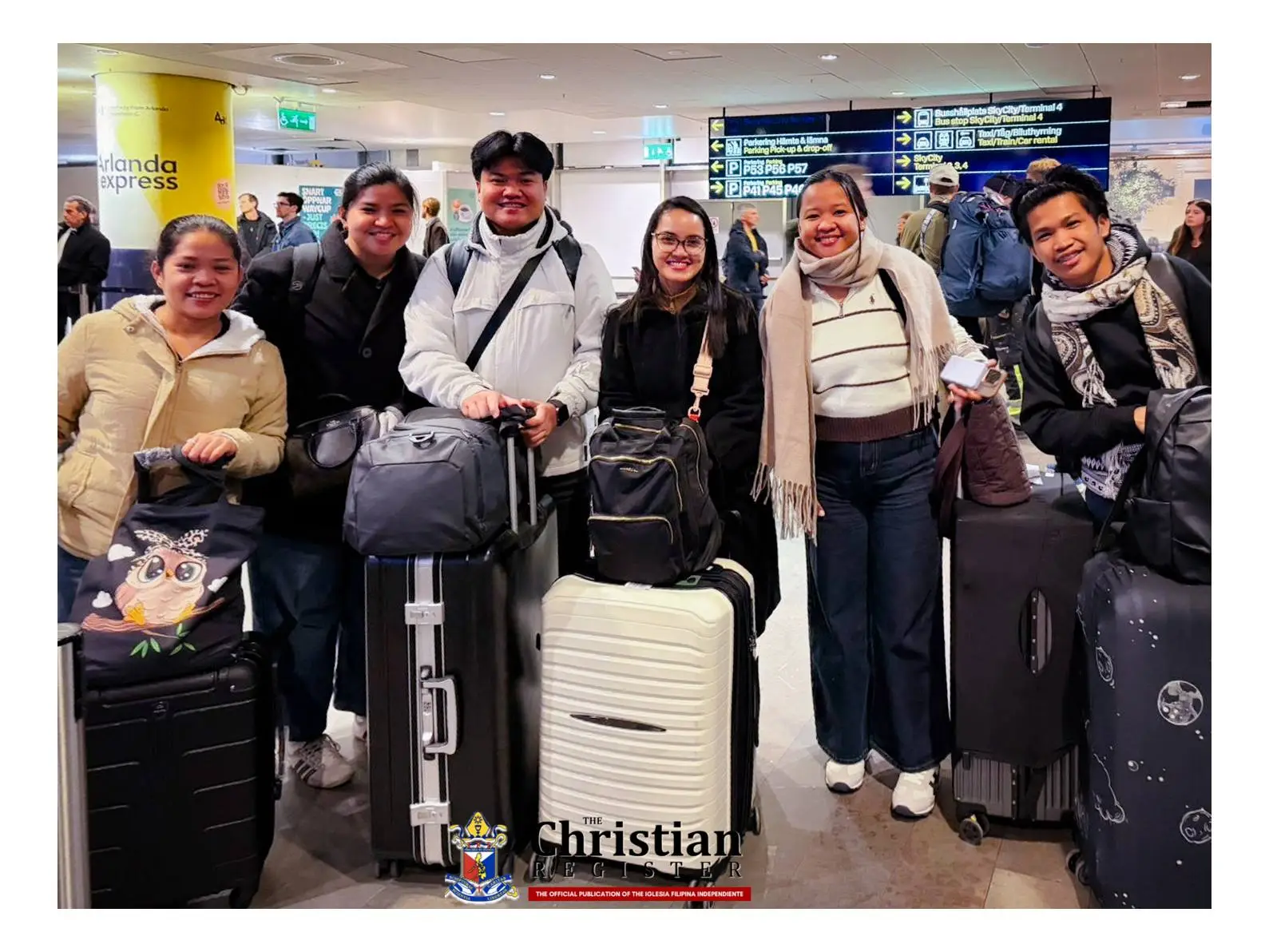
The participants of the Young in the Worldwide Church Youth Exchange Program (YEP) flew to Sweden armed with the tools to represent Iglesia Filipina Independiente (IFI), after undergoing a Pre-Departure Orientation on March 4-5. “This is an important gathering that prepares the participants for their experience in Sweden,” said Rev. Jewel Tumaliuan, the YEP Coordinator and IFI National Program Coordinator. “We want them to be resilient to the cultural and other differences, to be wide-eyed explores, and to be responsible ambassadors of the church.” The participants — Carol Turdil (Diocese of La Union, Ilocos Sur and Abra), John Brickxler Banal (Diocese of Rizal and Pampanga), Shery Mae Escabusa (Diocese of Malaybalay), Shema Kyn Batoy (Diocese of Oroquieta), Mary Ann Daguplo (Diocese of Bohol) and Christopher Saniel (Diocese of Marinduque, Quezon, Batangas and Camarines) — underwent worship, lecture and workshop sessions to both learn and reflect. YEP is a programmatic expression of the Concordat of Full Communion between IFI and the Church of Sweden, which now marks 30 years. The six flew for Arlanda Airport in Stockholm on March 12. Resource speakers included Rev. Wilfredo Ruazol, IFI General Secretary Bishop Dindo Ranojo, and National Youth President Vaughn Alviar. Some activities were designed as peer learning sessions. Participants learned about the church’s history, its commitment to justice and service under the spirit of Pro Deo et Patria, and the responsibility of serving as “Concordat Ambassadors” to strengthen ecumenical friendship and solidarity. “We want our young people to take this opportunity to learn about the worldwide Church firmly grounded on the mission of Christ in the Philippines, and how the IFI has taken part in it,” said Alviar. “We emphasize that the exchange program is not only about experiencing a new culture but also about sharing the stories, struggles and faith of the Filipino people,” he said.